Terminology
Naslagwerk voor wingfoil-begrippen: hydrodynamica, materiaal en opbouw — korte uitleg met visualisatie.
Geometry & Hydrodynamics
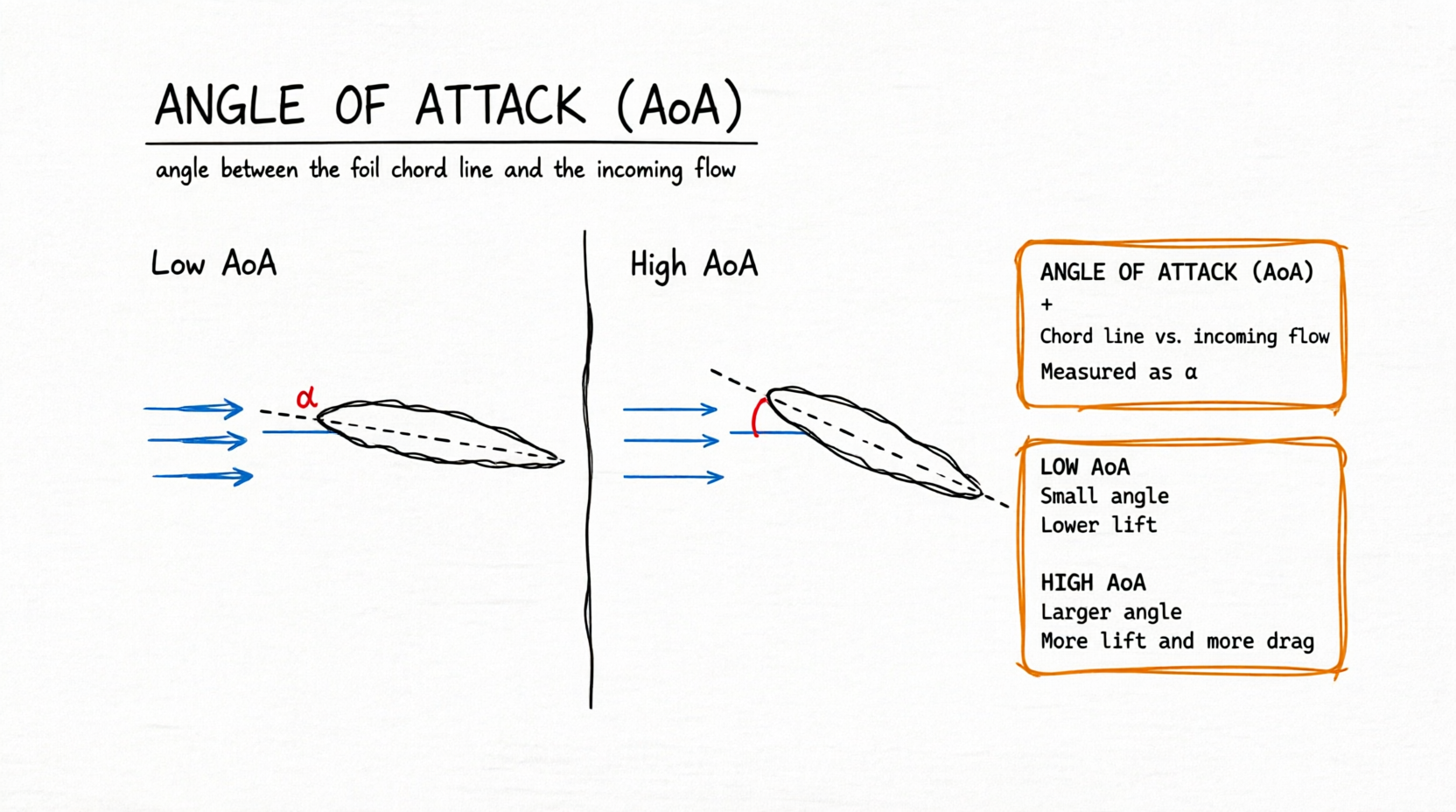
Angle of Attack (AoA)
The angle between the chord line of a profile and the oncoming relative water flow.
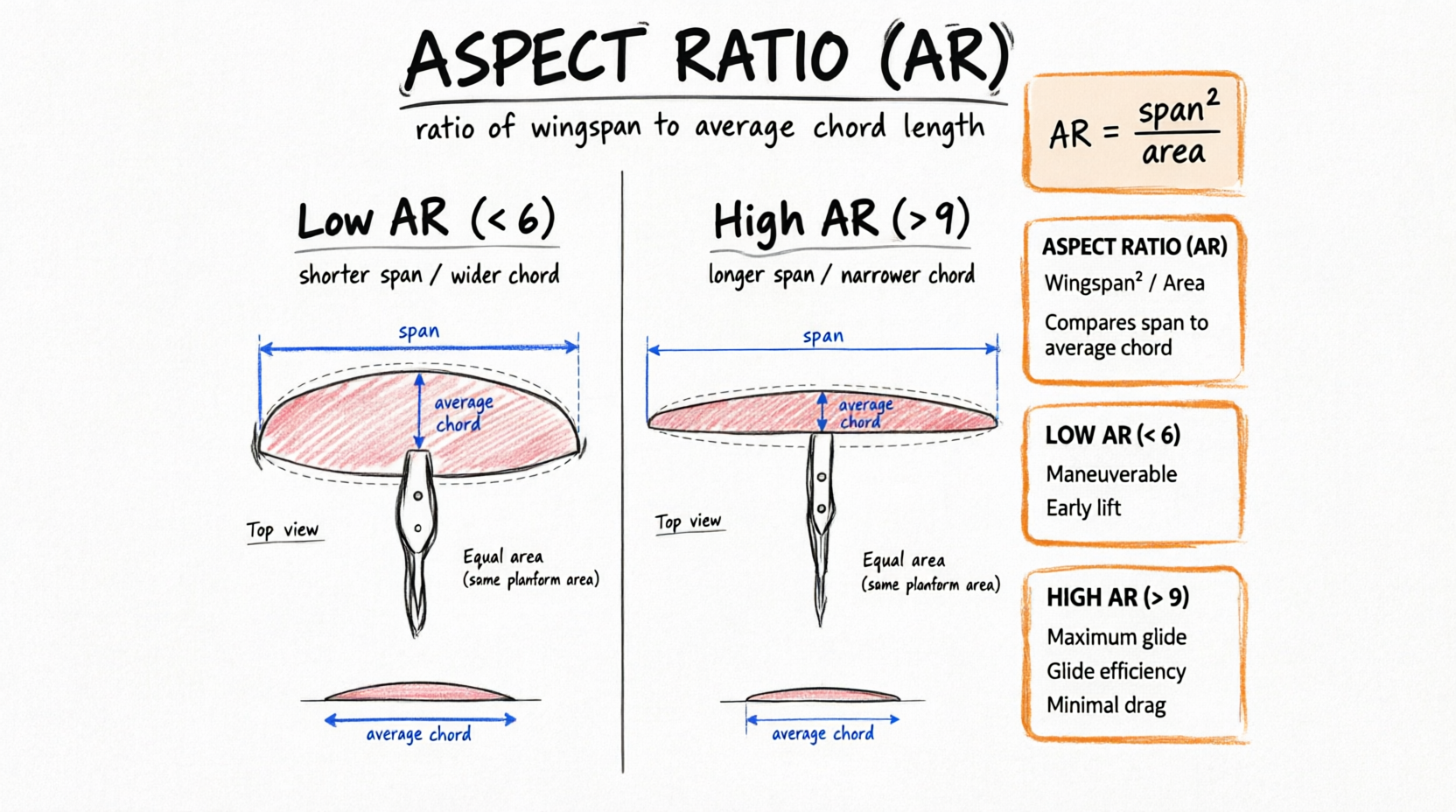
Aspect Ratio (AR)
The ratio between wingspan and average chord (Wingspan² / Area). A low AR (<6) gives maneuverability and early lift; a high AR (>9) delivers maximum glide, glide efficiency and top speed with minimal drag.
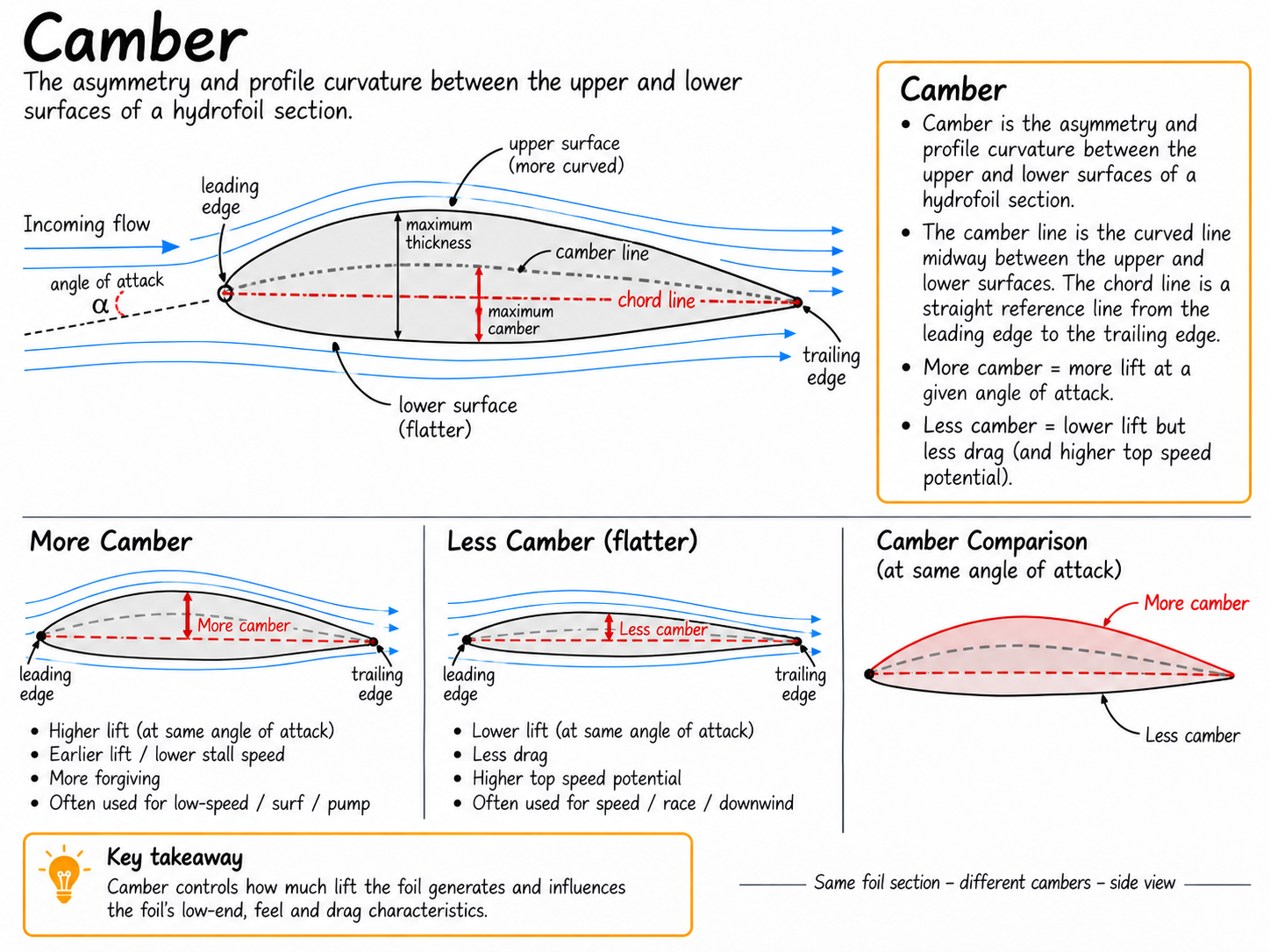
Camber
The asymmetry and curvature between the upper and lower surface of a profile.
Chord
The imaginary straight line between the leading edge and trailing edge of a wing profile.
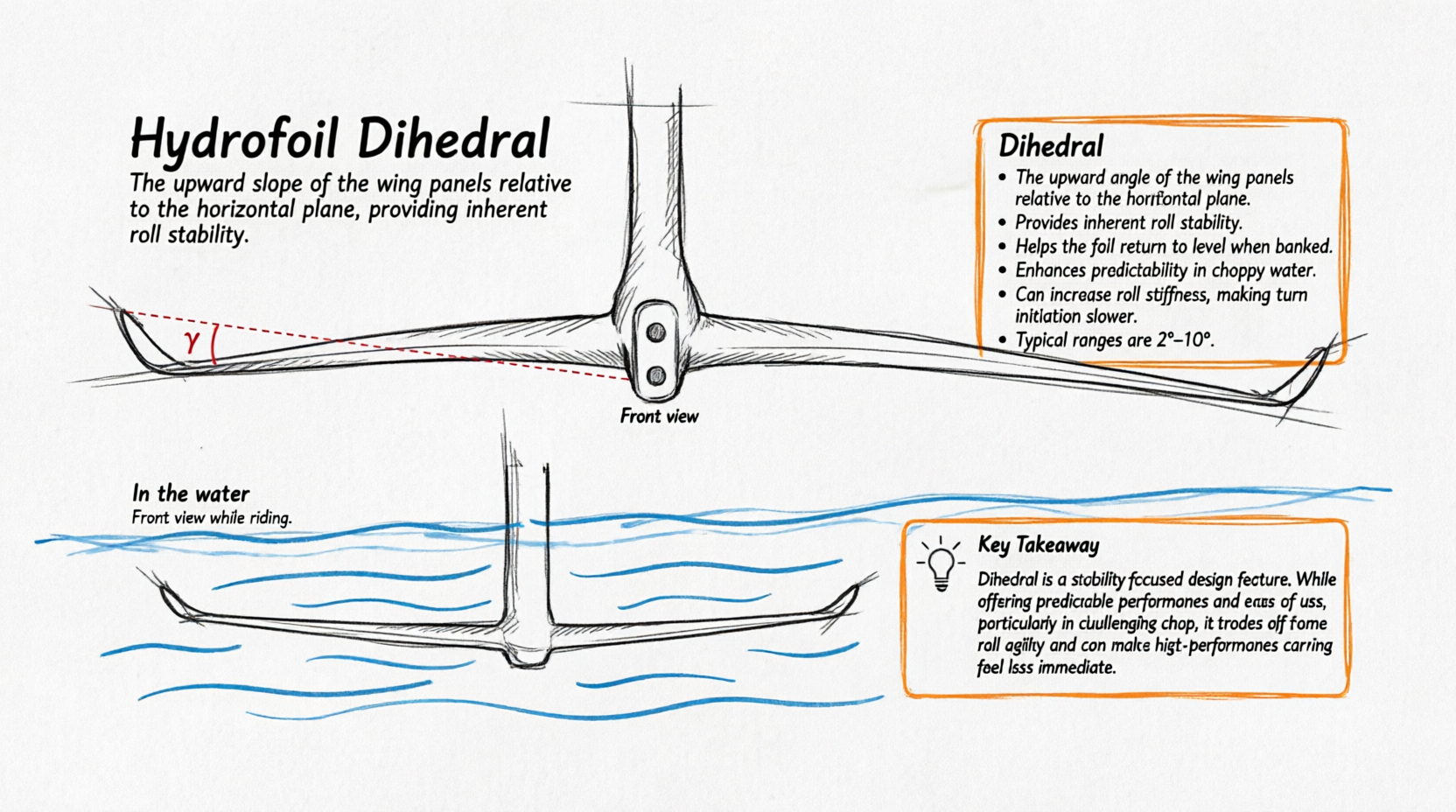
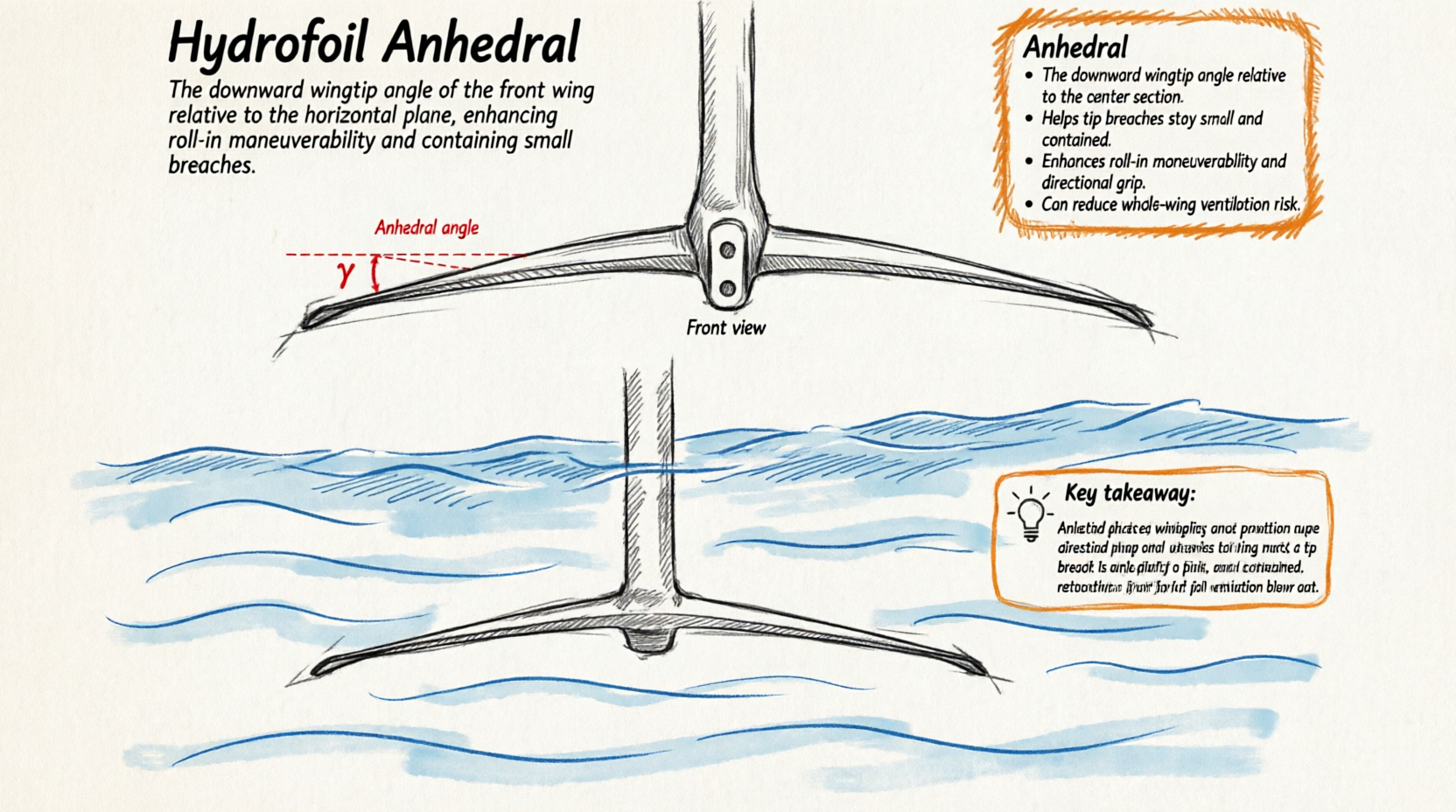
Dihedral/Anhedral
Wing tips angled up (dihedral) improve roll stability; angled down (anhedral) improve carving but reduce stability.
Glide
A foil's ability to hold forward speed and flight on kinetic and wave energy, with minimal drag and no rider input.
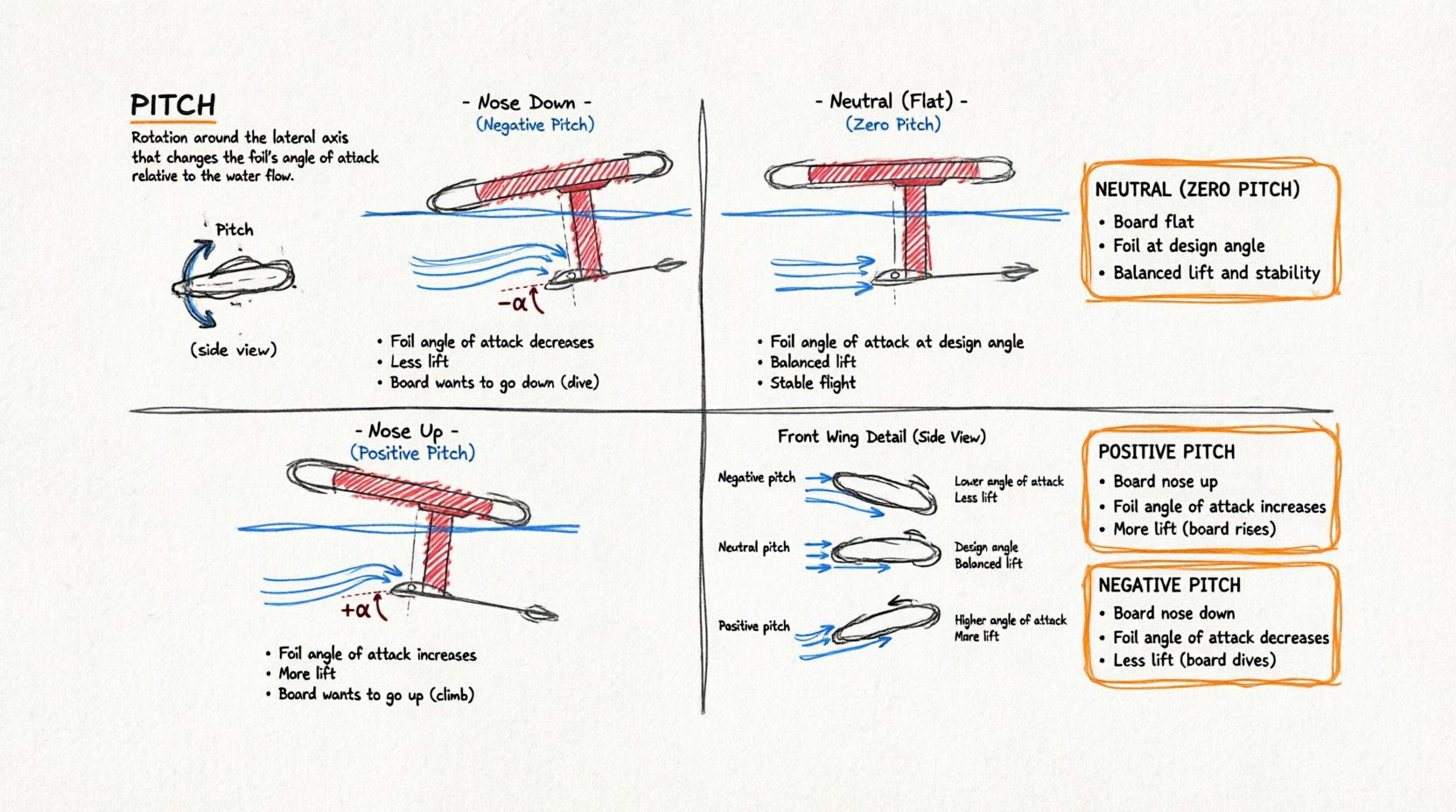
Pitch
Rotation around the lateral axis (across the direction of travel); determines whether the foil rises (climbs) or drops (dives).
Projected Area
The two-dimensional area of the wing seen straight from above, measured in cm².
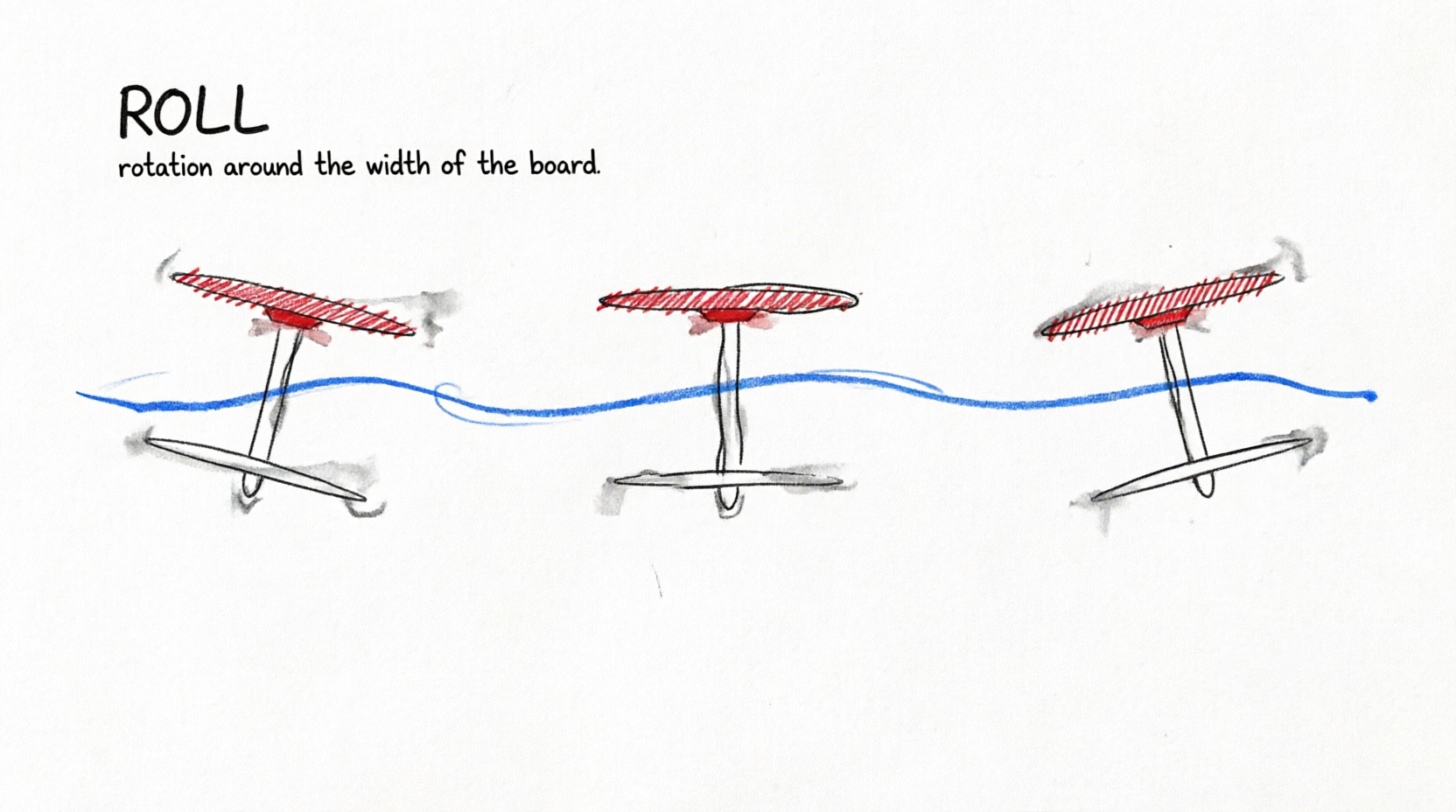
Roll
Rotation around the longitudinal axis (front to back); used to initiate carves, cut into turns and steer edge changes.
Stall
The sudden loss of lift when the water or air flow separates from the profile after the critical angle of attack is exceeded.
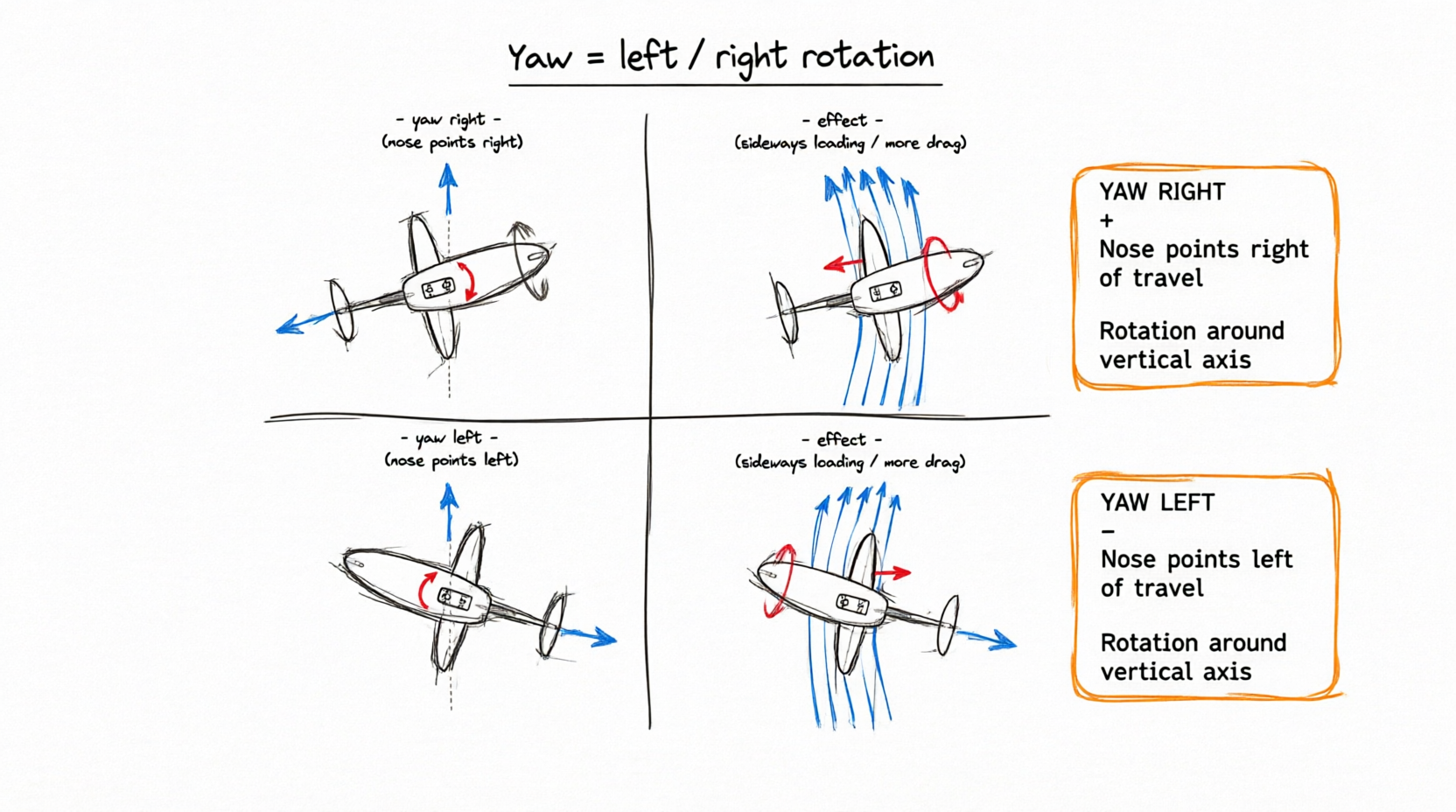
Yaw
Rotation around the vertical axis (the mast); determines heading and sideways slip angle.
Hardware & Components
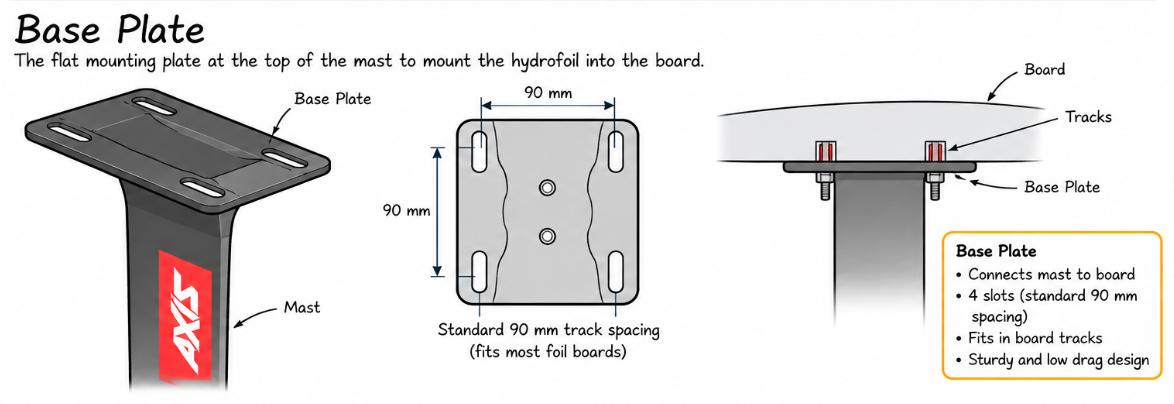
Base Plate
The flat mounting plate on top of the mast with four slots (standard 90 mm track spacing) for attaching it to the board's tracks.
Front Wing
The primary lifting profile at the front of the fuselage that lifts board and rider out of the water.
Fuselage
The rigid longitudinal bar that connects the mast, front wing and stabilizer.
Mast
The vertical shaft connecting the base plate on the board to the submerged fuselage; common lengths range from 70 to 95 cm.
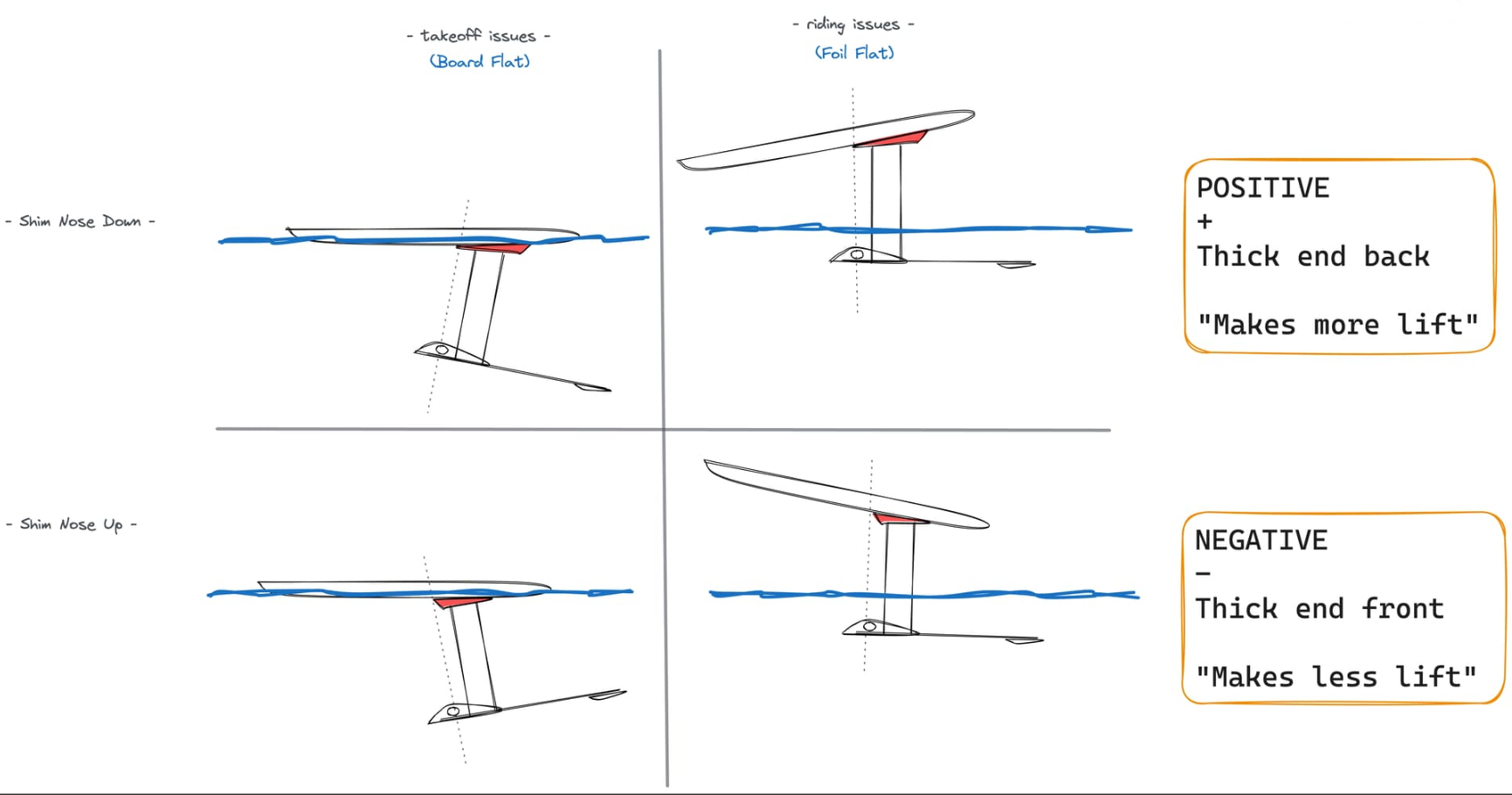
Mast Shimming
A thin, tapered composite or plastic wedge placed under the mastplate and board to change its angle of incidence.
Stabilizer (Stab)
The smaller horizontal wing at the back of the fuselage that dampens pitch and provides directional stability and balance.
Tef-Gel
A PTFE-based anti-corrosion paste applied to threads to prevent galvanic corrosion between stainless steel bolts and aluminum/carbon parts.
Riding Techniques & Maneuvers
Breach
The front wing or stabilizer breaking through the water surface, often leading to ventilation and sudden lift loss.
Downwinding
Extended downwind riding on open water, linking ocean swell or wind chop together on foil power without pulling on the wing.
Heelside
Riding with the heels on the windward side of the board and weight resting on the heels.
Toeside
Riding facing the wind with chest forward, weight balanced over the toes on the leeward rail.
Touchdown
Brief contact of the hull with the water surface during flight, without loss of control or falling.
Wing Anatomy & Aerodynamics
Apparent Wind
The resulting wind speed and direction acting on the wing, calculated as the vector sum of true atmospheric wind and the rider's forward speed.
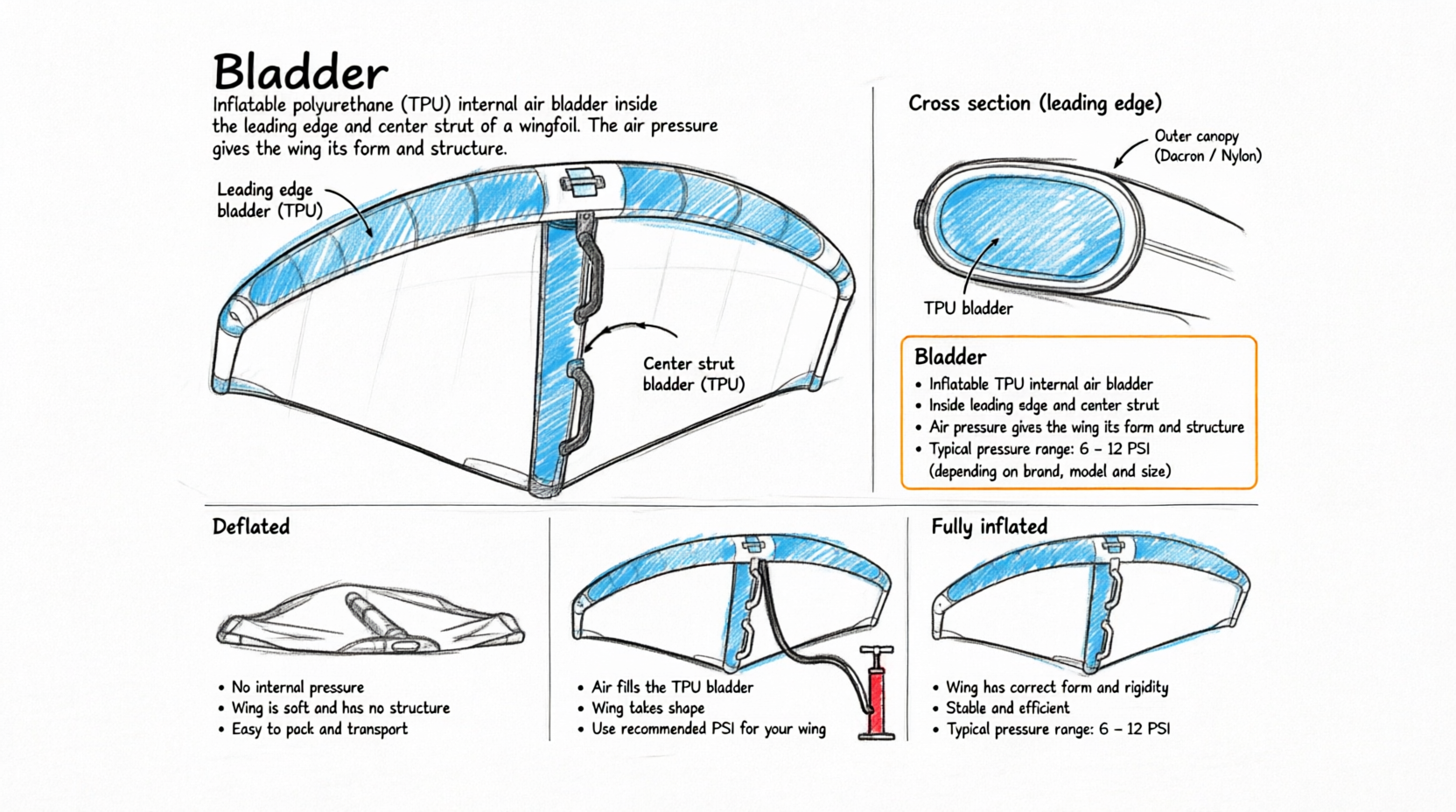
Bladder
The inflatable internal air chamber, made of polyurethane (TPU), inside the leading edge and center strut.